
Blewbury Nature Reserve
Introduction
Sustainable Blewbury has a ten-year lease from Thames Water to manage a nature reserve about 750m north of Blewbury village. This three-acre site was used to treat the village’s sewage until the
late 1990s, but since then has been a wasteland. We approached Thames Water in 2019 in the hope that we could plant a wood on the site, but on close examination, their ecologists found that it was
quite biodiverse. A local resident had recorded seeing over 80 species of birds there.
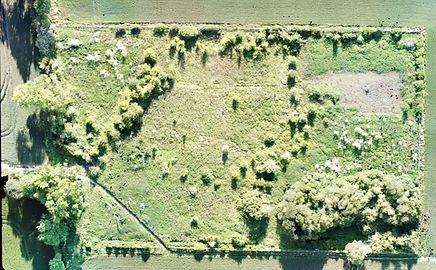
Image of the site prior to work
It offered to do some work to increase the range of habitats so that it could become a small nature reserve of
benefit to wildlife and the local community. The site is such that it is an island surrounded by intensively farmed fields so creating somewhere for wildlife to thrive was clearly beneficial.

More recent image of the site taken in 2024
Developing the Reserve
In the spring of 2022, Thames Water planted some hedging. In the winter of 2022/2023, they dug out a pond and some shallow lagoons putting the spoil over another part of the site covered in nettles, in which they planted an orchard for wildlife. This contains seven large fruit trees: plum, apple, pear and cherry.
They’ve also planted rowan, black alder, willow and more cherry trees elsewhere on the site as well as lots more hedging and shrubs. They created a bark pathway and another grass path through the site, put up a notice board, two information boards and two eco-towers (bug hotels).


Ecoparcels
Thames Water employed consultants to write a
management plan. This identifies seven distinct
habitats on the site including an area for reptiles.
Six are shown on the plan; the seventh is the
hedgerows. The reptile hotspot is a small area
where clinker remains from the sewage filter
beds, ideal for them to bask on.
We are now responsible for following this plan
and maintaining the reserve.
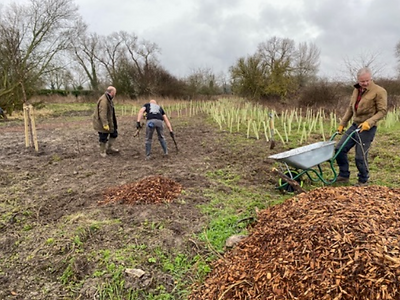
Volunteers working on the pathways March 2023

Mulching the young black alder trees
We launched the project in Blewbury Village Hall in February 2023 by having some guided walks to the site and an afternoon tea. Over 100 people attended, and over 30 volunteered to help with the maintenance. We’ve spent about a morning a month since then maintaining the paths and hedging plants (to stop them being choked by nettles and thistles), mulching the trees and strimming a sitting
area (previously covered in nettles). We planted a new hedge in March 2024 and have started to manage the rough grassland and scrub encroaching on the reptile area with scythes.


Educational visits
In May and June, we organise bird-watching sessions. An expert helps us to learn how to identify birds by song and sight. There are three species that are threatened or rare that we know breed on the site. These are Linnets, Yellowhammers, and Whitethroats. We have seen most of the 80 species seen before the reserve was created. Any that haven’t been seen have disappeared from other places locally too.

Challenges
Muntjac and roe deer are present on the site. They like to graze most plants. This means that the hedging and shrubs we planted, as well as the small cherry trees, have been struggling to survive. It seems that the deer don’t like thorny shrubs like hawthorn and blackthorn or birch and hazel. Fortunately, there are a lot of shrubs and small trees on the site that established themselves while the perimeter fence was still intact after the works closed. This would have kept the deer out at that time. We do not have plans to keep the deer out now, but are replacing any dead hedging plants with hazel and hawthorn.

Monitoring.
In 2025, we started a reptile monitoring programme, visiting the site weekly and inspecting refugio (mats) placed across the site. Both male and female Grass Snakes have been seen as well as Common Lizards. The photo shows a Grass Snake. As soon as we lift the mats, the snakes slip away into the grass, so we must be quick at taking them!
We have also been identifying the plants on the site. In 2024, we recorded 76 species ranging from clover to comfrey, willow herbs to teasels (which Goldfinches love) and dewberries. There is a complete list on the notice-board at the site, or you can contact our secretary @sustainable-blewbury.co.uk
Access
The site is open all year. You can find it by walking down the concrete road north of Blewbury VillageHall car park. If you’d like to join one of our guided walks or volunteer to help with the site maintenance, email secretary@sustainable-blewbury.org.uk. The volunteers who come enjoy the company and getting to know new people as well as being in a peaceful place. We expect the site to change markedly over the next few years as the hedging and trees grow. It’s
good to have so many people helping at the site and to appreciate what it offers to our local wildlife.
June 2025