
Sustainable Blewbury
is now a charity. We are deeply concerned about climate change and closely related environmental issues, especially biodiversity, as well as protecting our lovely and unique village and its surroundings. We must end our dependence on fossil fuels because of the increasing levels of carbon dioxide and other greenhouse gases in the atmosphere. We need to explore ways in which we as a village can adapt to a low carbon and more sustainable way of living, while maintaining a good quality of life. SB places the highest priority on raising awareness of climate change and communicating urgently how it affects all our lives.
Our Project page has more on Sustainable Blewbury’s origins, a list of our projects and who to contact for more information.
Note the carbon dioxide levels in the sidebar at the left. They are still rising and are now about 50% higher than in pre-industrial times. They must be reduced to a safe level of about 350 ppm, but so far there is not sign of any significant reduction in emissions, not even a levelling-off.
Sustainable Blewbury Activities and Events
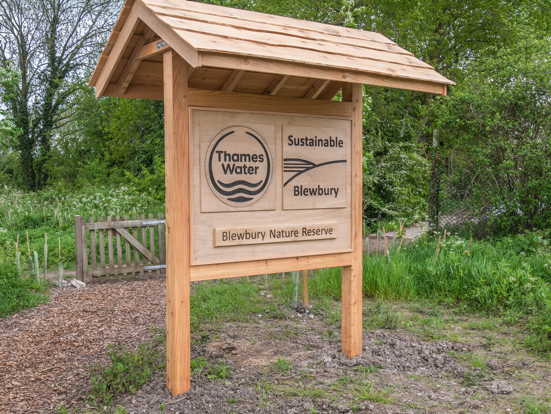
Blewbury Nature Reserve
Now open again. Thanks to Mark Shayler for giving two benches for everyone to enjoy and to Thames Water for installing two eco-towers.
Community Orchard in Tickers Folly Field
Note that fruit produced in the orchard can be picked freely, but do leave enough for others.
We have a substantial and expanding programme of activities in and around the village. Getting involved is fun and can make a very positive contribution to village life and the local environment. If you’d like to get involved, or to receive our free Newsletter, email us at info@sustainable-blewbury.org.uk or phone John Ogden at 01235 850372.
Newsletter 57 – November 2023
Click here for our latest newsletter:
SB news and activities: SB is now a charity; Apple juicing 2023
Articles: Blewbury Nature Reserve update; Progress on Blewbury's new woodland; Local repair cafes; Helping Blewbury Pre-school with their energy problems; Wild orchids on the Downs 2023;Repair cafe, Village Hall, 19 Nov, 2 to 4 pm
First winter talk, Oxfordshire Wildlife Rescue,
Vale Room, 20 Nov., 8.00 pm
Annual Leaf Clear-up, 3 Dec, 2.00 to 3.30 pm
Articles
Blewbury Wildlife Reserve
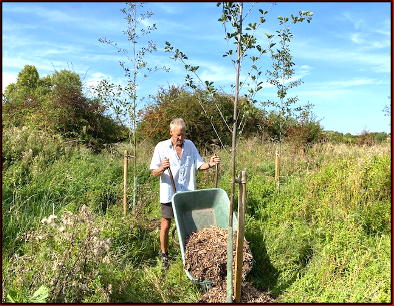
Progress on Blewbury’s new woodland, Quaker Wood
Apple juicing 2023
Sustainable Blewbury organisational matters
Climate crisis
COP28
Ashden Awards Ceremony 2023.
Blewbury Community Chalk Streams Group (BCCS)
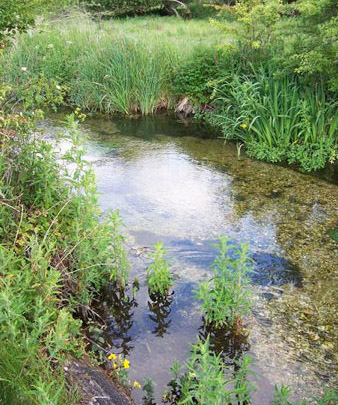
As part of Sustainable Blewbury’s commitment to caring for all aspects of our village, we are supporting a group who will be working with us to conserve, enhance and restore Blewbury’s streams. BCCS is a volunteer group formed in May 2021, by scientists and lay people who care about the conservation of Blewbury’s ancient chalk streams and the Cleve. This sub-group of Sustainable Blewbury will work with willing riparian owners to care for and preserve our village waterways. have a look at the stream group's website: blewburychalkstreams.org.
Blewbury Climate Action (BCA)
BCA is a group formed by Sustainable Blewbury
at the request of Blewbury Parish Council.
Our aim can be summarised as: ‘acting
locally in a global climate emergency’.
We can see for ourselves that our climate is changing, and scientists from all over the world agree that planet Earth is facing a climate emergency. But far too many big companies and governments are failing to properly and seriously address the crisis, so we must tell corporate leaders and politicians that we expect them to do better for ourselves and future generations, and we ourselves must also do what we can to help.
The BCA was created to provide unbiased information and to help people do things large or small that will make a difference to the global climate emergency.
Note that production of our blog/web page is suspended at present.
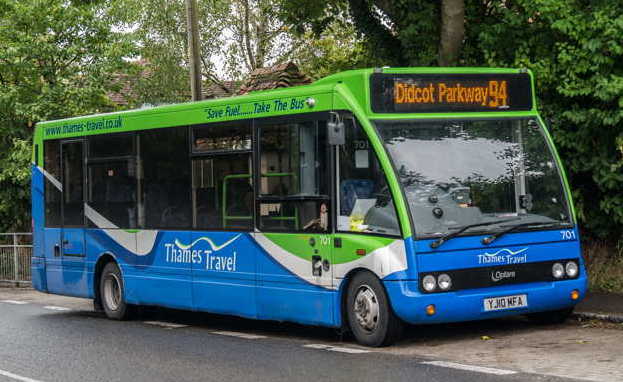
Public Transport: Blewbury Buses
Blewbury has a fairly minimal bus service to Didcot. In addition to trains, a variety of bus routes to nearby towns and cities is available from the Didcot Parkway rail station.
There is more information on our local bus service and on buses that go to the main Oxford hospitals on the main Blewbury website at: blewbury.co.uk/transport-services.
Click on these links to find out:
- why we need Sustainable Blewbury;
- what we are doing;
- how to help; and
- how to contact us.
Our activity is organised around five main themes (with some overlap):
|
The travel and transport theme promotes public transport and encourages cycling and walking, with more cycleways and footpaths, in order to reduce car dependency. |
The Blewbury Energy Initiative aimed to reduce energy consumption in buildings, encourage the use of renewable energy and use much less coal, oil and gas. It is now part of Sustainable Blewbury |
The food and farming theme supports and promotes local food production and marketing, in order to reduce food miles, as well as encouraging fair trade. |
|
Natural Environment & Heritage The natural environment and heritage theme is to promote protection of Blewbury's history, architecture and special characteristics – such as its springs and streams, trees, green spaces and village fabric. |
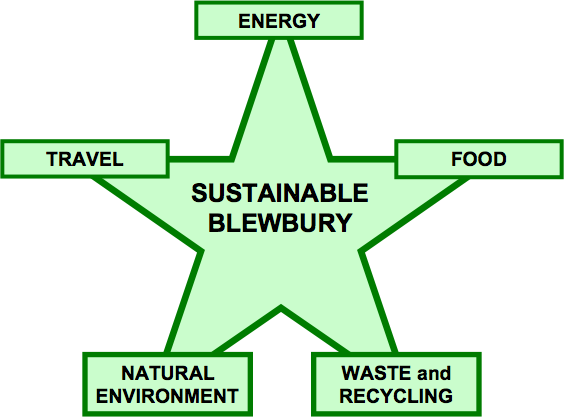 |
The reduce, reuse, recycle (and repair) theme aims to reduce the amount of waste, and to encourage reuse of items and recycling to recover raw materials. It promotes water saving, local recycling and household composting. |